
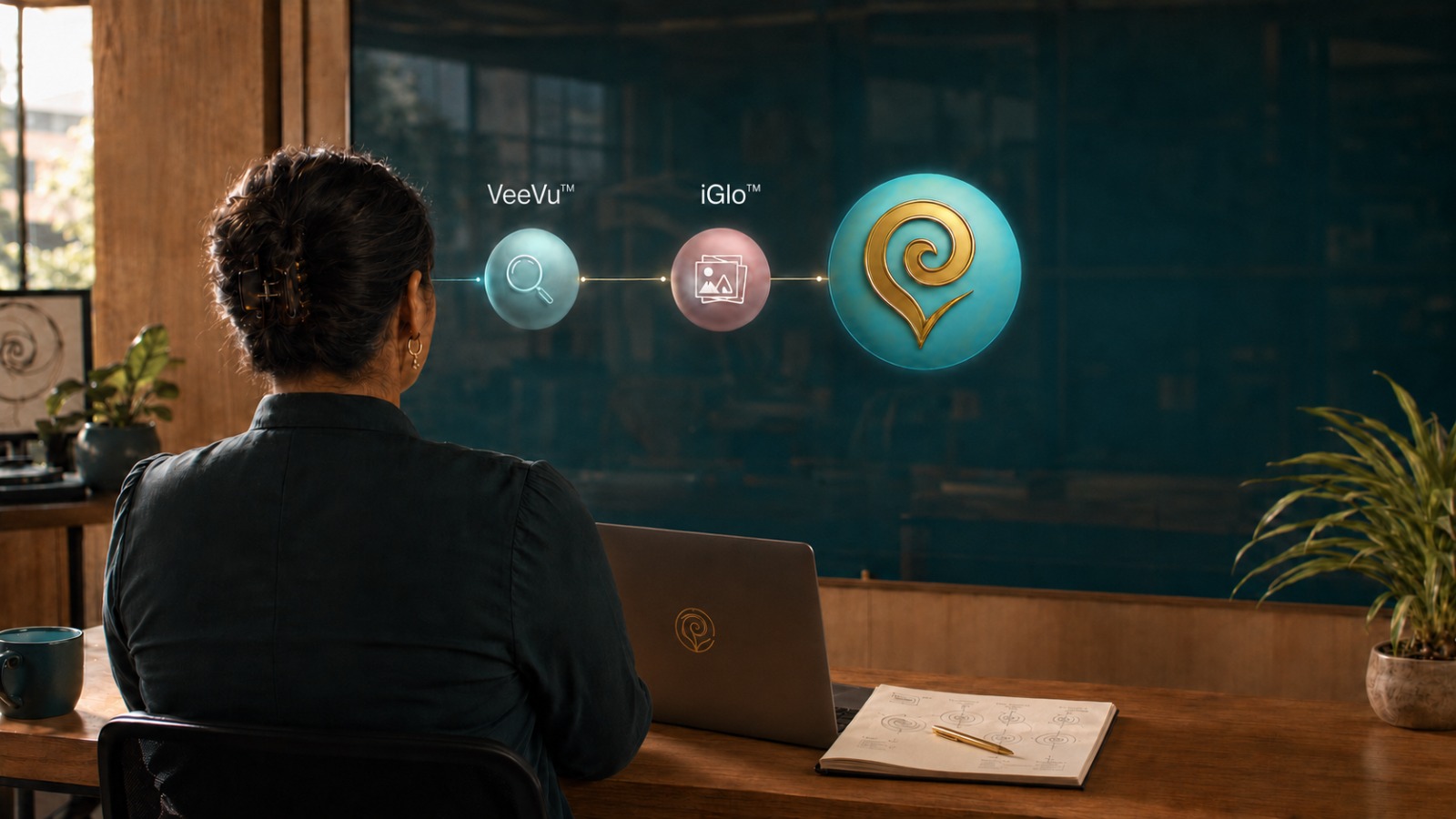
VeeVu™ began as a way to help us find useful product information more quickly. But as I explored the idea further, I realised that solving the problem we faced before buying a product wasn’t enough.
I began questioning why we were buying so many products in the first place. Why were we spending hundreds, sometimes thousands, trying one thing after another? We were relying heavily on social media, hoping the next recommendation would finally work for us. But when a product didn’t work, it left us wondering how something everyone online seemed to swear by could produce such different results. That led me to look more closely at how those products were being promoted.
Creators would talk about products they swore by, often with an affiliate link or discount code attached. Their support for the product may have been genuine, but it made me question how we could tell the difference between a personal recommendation and one created to make a sale. I even looked into becoming an affiliate for a popular brand myself. The process involved submitting a pitch for content promoting the product. If the brand approved it, the creator could receive an affiliate code and earn money from the sales it generated.
That was when I began to understand how much product marketing had changed. Brands were no longer only selling through traditional advertising. Products were now being promoted through people we followed, trusted and sometimes felt we knew. But where did that leave us?
One creator might say a product completely transformed their skin or hair. Another person might say it did nothing for them. There was so much information coming from brands, creators, advertising and social media that it was becoming harder to know who or what to trust. We kept searching for answers but often ended up more confused than when we started.
That was when the idea became something bigger. I realised this wasn’t only about making product information easier to find. It was also about helping us understand our own experiences instead of relying entirely on someone else’s. I started asking what could genuinely help. What if we could access the important product information quickly, but also keep track of what happened after we bought it? What if we could look back at our own photos and notes and see whether something was actually working for us?
That thinking led to iGlo™ and eventually to Tai Ora as it is today.
I didn’t sit down one day and plan the whole thing. I didn’t know exactly what Tai Ora would become. It grew as I researched, listened to people and kept asking questions. Each time I understood one part of the problem, it seemed to uncover another. Eventually, I realised I wasn’t just creating a better way to view product information. I was building something that could help us understand our own experiences and feel more confident about the decisions we were making.
People sometimes ask whether I always knew Tai Ora would become what it is today. I didn’t. If someone had shown me the full vision when I first started, I probably would have thought it was far too big for me to build. But I didn’t need to know all of that at the beginning. I only needed to start with the first idea and keep following where it took me.
Looking back, I’m glad I didn’t stop at the original problem. Tai Ora may have started with products, but I now know it was never only about products. It was about helping us feel more confident in our own choices.